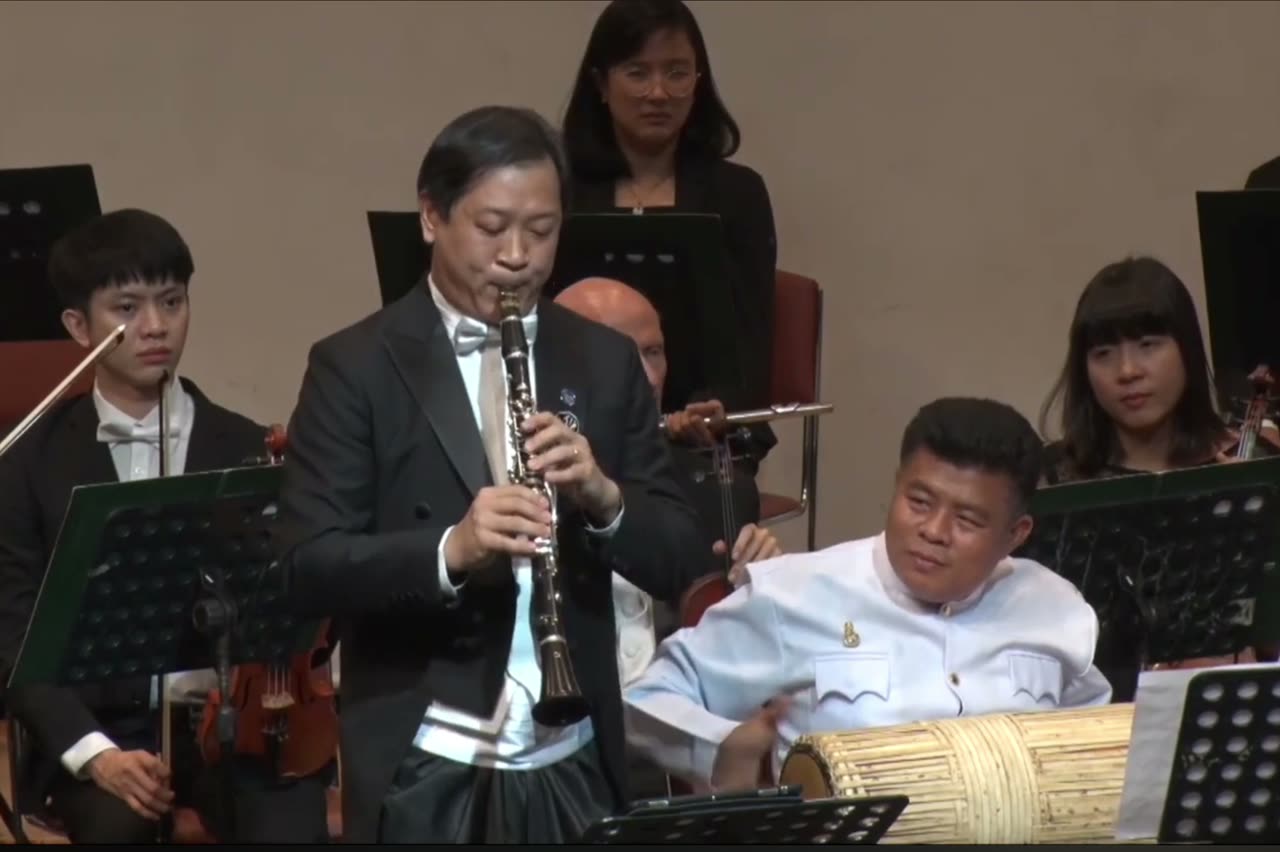
Composer
Works for orchestra, chamber ensemble, and voice — bridging Thai traditional sources with the vocabulary of contemporary concert music.
See orchestration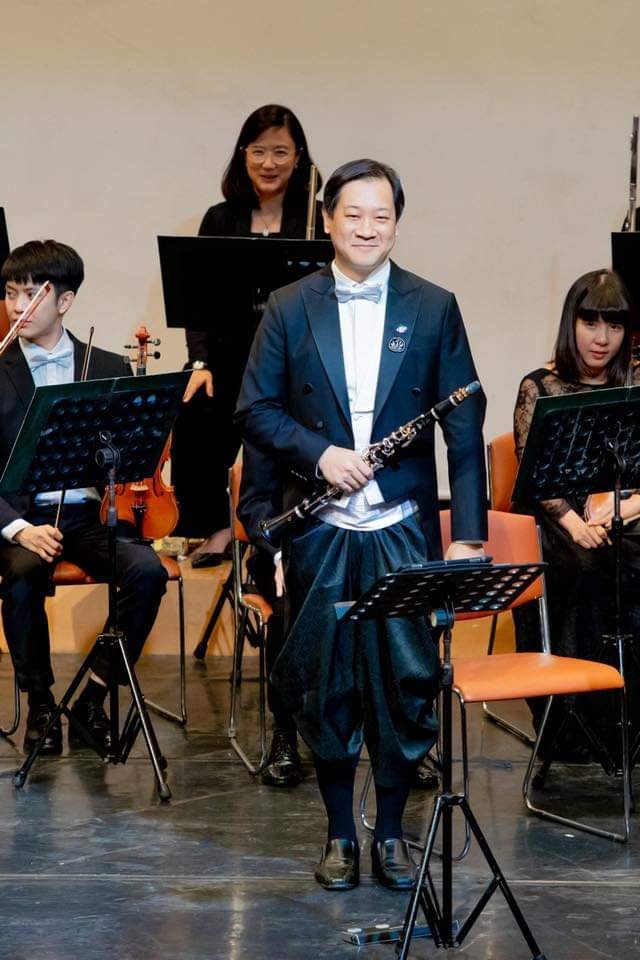
More than two decades on the concert stage and in the classroom — a life lived across disciplines that listen to one another.
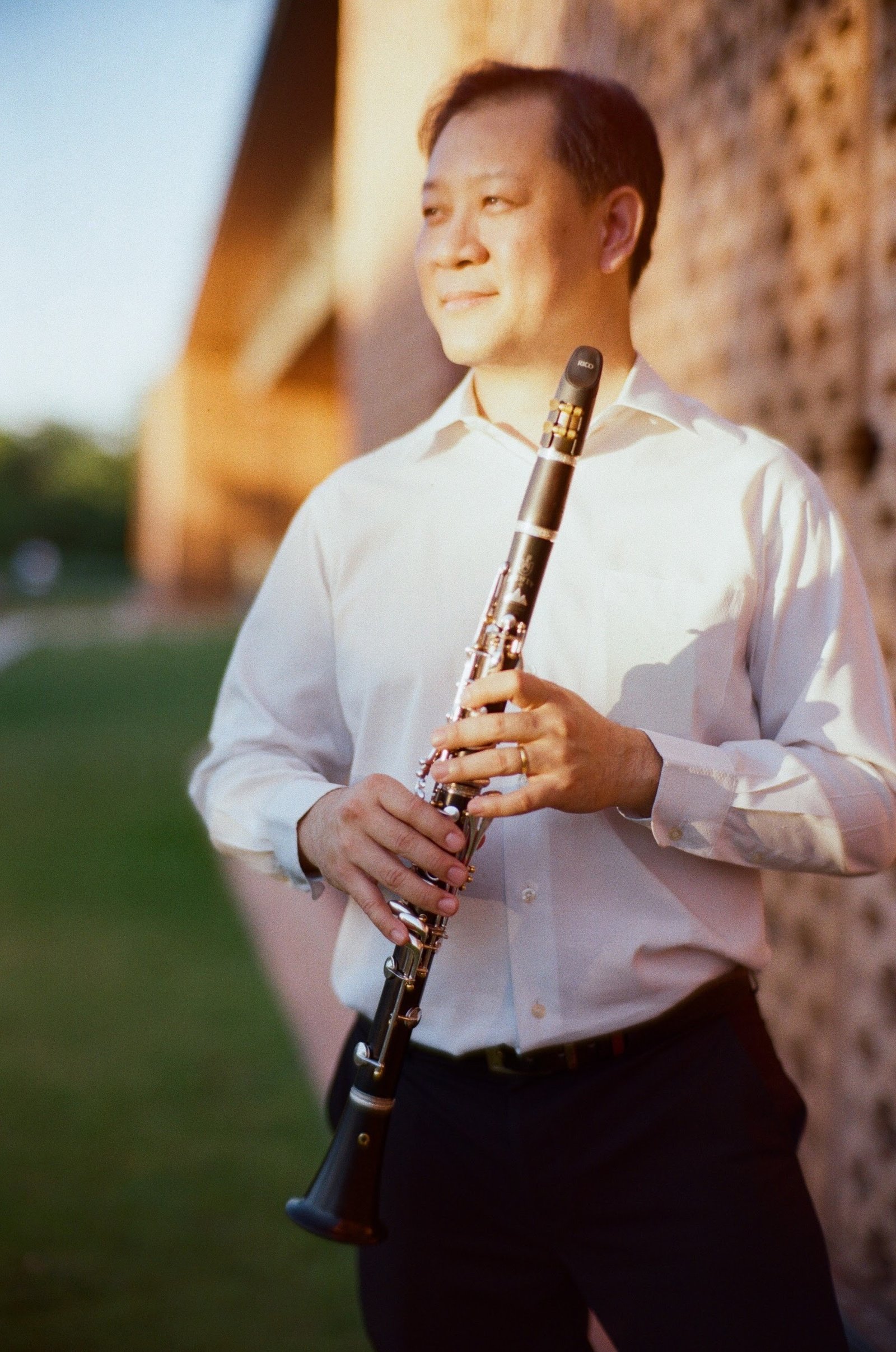
Dr. Yos Vaneesorn is a Thai composer, clarinetist, educator, and researcher whose experience on the concert stage and in the classroom spans more than two decades. He has taught at several of the country's leading universities — Kasetsart University, Silpakorn University, and Chulalongkorn University. His expertise ranges widely, from clarinet performance, form and analysis, and orchestration to cross-cultural research, and he follows contemporary developments closely — particularly the role of technology and artificial intelligence (AI) in today's creative musical process.
As both a soloist and orchestral musician, he has performed in Thailand and abroad — in Japan, Germany, Ireland, and the United Kingdom. As a composer, he writes for orchestra, chamber ensembles, and voice, often building bridges between traditional Thai musical material and the language of contemporary concert music. His teaching rests on the conviction that analytical rigor and expressive imagination are not opposites, but two ways of reading the same page.
The portfolio you are about to explore is offered in the same spirit — let the work reveal itself to you.
Works for orchestra, chamber ensemble, and voice — bridging Thai traditional sources with the vocabulary of contemporary concert music.
See orchestrationSolo, chamber, and orchestral appearances across Thailand and abroad. Repertoire from Mozart and Brahms through to Berg, Bartók, and new Thai music.
Into the studioUndergraduate courses in Form & Analysis, Orchestration, and Clarinet — taught with primary scores, bilingual materials, and a belief in analytical imagination.
Courses taughtWriting on musical form, the analysis of post-tonal repertoire, and the dialogue between Thai traditional practice and Western concert music.
Research themesFrom homophonic classical forms through Baroque contrapuntal practice to the post-tonal world of Webern, Berg, Bartók, and Stravinsky. Closes each year with the postlude on METAFORM — musical idea, character, proportion, and the copyist.
Term Paper 2026 assignmentWriting for the modern symphonic orchestra — from the first two-line exercise to the full score. Range, transposition, timbral pairing, texture, balance, and the craft of turning an idea into parts.
Weekly private instruction for undergraduate clarinettists. Tone production, air and support, repertoire from classical through contemporary, orchestral excerpts, and studio class performances.
A senior-year reading seminar on musical idea, character, proportional weight, and the copyist's discipline — building toward the commencement assignment: a complete analytical portrait of a multi-movement work.
Form & Analysis assignment pages remain at their existing URLs so students can keep using the same links.
Open Term Paper 2026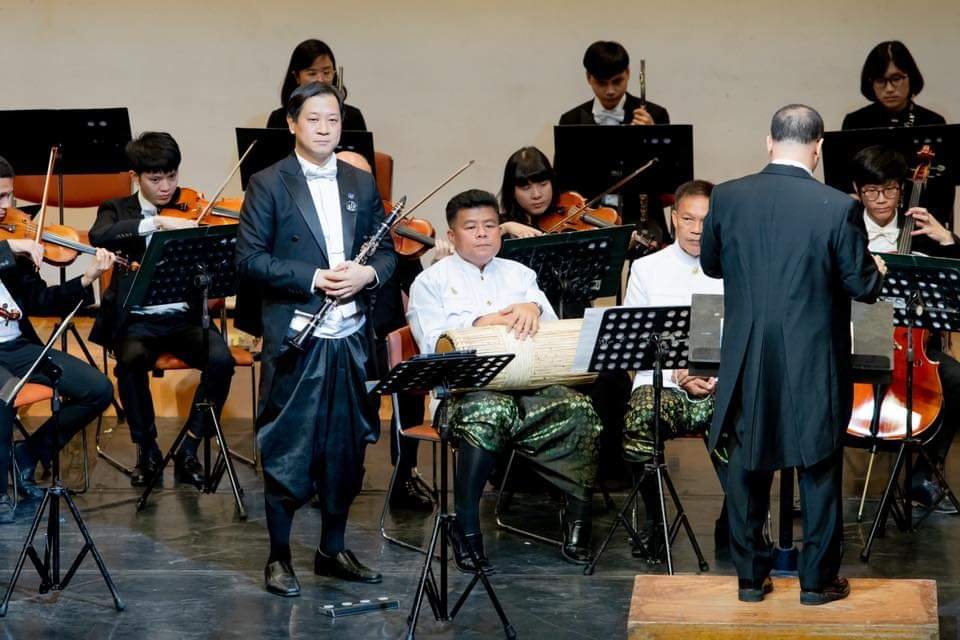 With orchestra, 2024
Orchestration is often taught as a catalogue of instruments. I teach it — and practise it — as the art of writing for a room: a room full of players, breath, resonance, and the decisions that happen between them. A good score gives each musician a reason to lean forward.
My compositions draw on Thai ceremonial material, the ranat ek and khong wong, and set them alongside the concert hall — not in fusion, but in conversation. Each work is an attempt to let two practices speak to each other on equal footing.
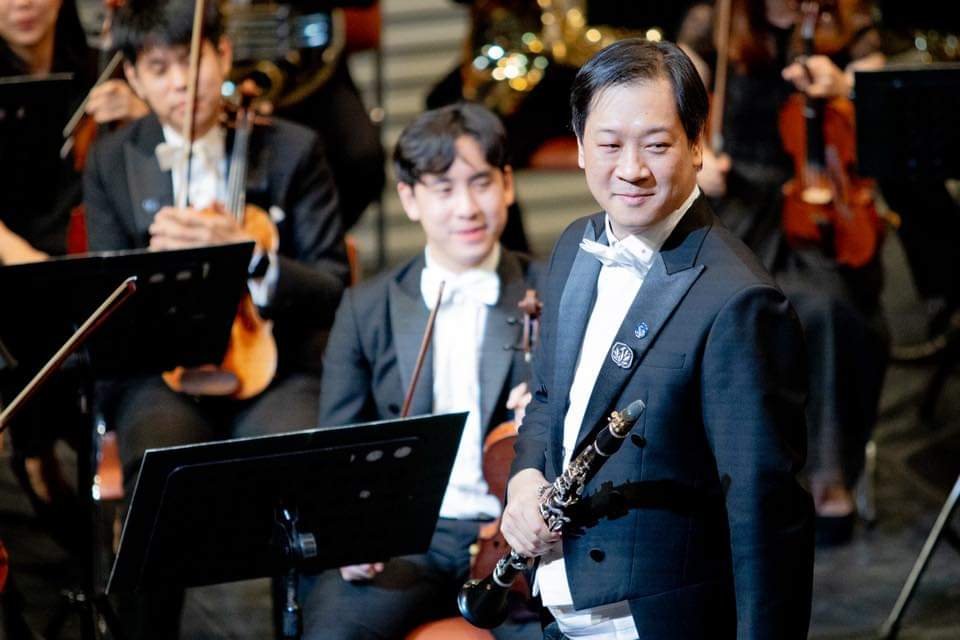 Clarinet · stage
“I want every phrase to breathe — not only in the lungs of the player, but in the listener. That is what the instrument is for.”
Reading the structural logic of twentieth-century works — Webern, Berg, Bartók, Stravinsky — through idea, character, and proportional weight. How the score's logic stays legible once the tonic has gone.
Not fusion, but conversation. How the material of Thai ceremonial and classical practice — ranat ek, khong wong, pi phat modes — can sit beside the orchestra without either side losing its accent.
Where does the composer's hand remain when generative tools write at the speed of thought? A working study of AI in the pedagogy of composition, orchestration, and analysis — with an eye on what cannot be delegated.
Music is not the sum of its parts. It is the attention we pay to how they arrive — in time, in a room, in the ear of someone who came to listen.
For teaching inquiries, performances, and research conversations.